

The latest article in our Insight Snapshot series focuses on the NRFC’s Transport Priority Area and the opportunities for investment in the innovative transport manufacturing businesses that are improving Australia’s logistics and supply chain management. Visit our website to read our most recent Insight Snapshots on our Renewables and Low Emission Technologies and Defence Capability Priority Areas.
In a country as large as Australia, transport underpins the economy. Ensuring that products ranging from food and fibre to iron ore and fuel are distributed quickly and safely via our vast networks across road, rail, seas, and skies is a massive and often underappreciated part of our everyday lives.
As Australia transitions to a low-carbon economy and strives to improve its sovereign manufacturing capabilities, there are significant opportunities for the transport sector to make itself cleaner, faster, and more efficient. With technologies such as electrification, sustainable aviation fuel, ammonia, hydrogen, and automation all at various stages of development, the potential for the transformation of the transport sector is enormous.
This Insight Snapshot focuses on the NRFC’s Transport Priority Area and its role in building Australia’s sovereign capability. The priority area is actively involved in:
- manufacturing aircraft, road vehicles, rail vehicles, or ships
- products for use in connection with aircraft, road vehicles, rail vehicles, or ships.
In this article, we outline what this Priority Area covers, why it matters for Australia’s economy and resilience, opportunities for growth, and how NRFC investment will build sovereign capability in the transport sector.
What does transport cover?
Transport manufacturing is a systems capability. It spans the design, production, integration, and upgrade of platforms and components across road, rail, maritime, and aviation.
In practical terms, it covers the manufacture of complete vehicles and vessels as well as the sub‑systems and products used in or in connection with them. This includes:
- propulsion and drivetrains
- batteries and power electronics
- braking and suspension
- interiors and safety systems
- autonomy and control software
- charging and depot equipment
- other enabling technologies.
The emphasis is on the industrial know‑how and manufacturing depth that allow Australia to build, adapt, and support transport assets over their life, and to retain more value domestically across these supply chains.
Why it matters for Australia
Transport capability is a core enabler of economic performance, productivity, and national resilience.
Freight, logistics, and mobility underpin the functioning of every major industry, from resources and agriculture to defence and advanced manufacturing.
When Australia can manufacture critical components and the supporting products that vehicles rely on, it reduces exposure to fragile global supply chains and long lead times, improves security of supply for essential services, and creates secure, well-paid jobs across engineering, fabrication, electronics, and software.
The capability lift also spreads – advances in autonomy, electrification, and digital systems developed for transport often diffuse to adjacent sectors, improving safety, efficiency, and industrial competitiveness more broadly.
The growth opportunity
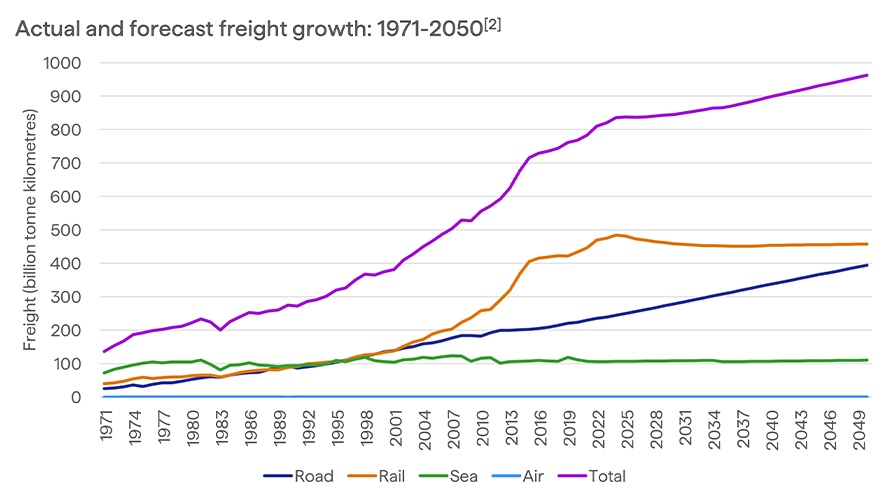
Australia’s domestic freight load is expected to increase by 26% between 2020 and 2050 to 964 billion tonne kilometres per annum. The majority of this growth will come from road freight, which is expected to increase by 77% over the period.[1]
The heavy transport sector currently makes up 44% of Australia’s transport emissions, and this is projected to increase by 16% by 2040 unless action is taken to reduce emissions[3]. This creates a significant opportunity for new developments in electric and hydrogen trucks to reduce emissions or advanced driver assistance technology to improve efficiency and safety.
This transition has already begun around the world, with increased electrification of vehicles and fleets, and the adoption of autonomous and digitally connected technologies.
This transition is reshaping industrial supply chains and creating new demand for vehicle classes, control systems, and high‑reliability components. Australia is well placed to compete where sophisticated systems integration, software and electronics, advanced materials, and precision manufacturing come together.
NRFC investment can help unlock high-value opportunities in the value chain, including:
- heavy transport electrification
- advanced rail and maritime automation
- aerospace sub‑systems
- enabling products such as power electronics, energy storage, safety‑critical software, and charging and depot hardware.
By anchoring these capabilities onshore, Australia can position its firms to participate in global supply chains while meeting domestic needs.
How NRFC investment builds sovereign capability
NRFC investments target projects that anchor more of the transport manufacturing value chain in Australia.
In the case of the NRFC’s investment in Applied Electric Vehicles, the combination of local electronics and software manufacture with systems integration actively strengthens supplier networks, supports skills formation in mechatronics and embedded engineering, and demonstrates export‑ready products that meet stringent safety and reliability requirements.
Over time, these investments help to deepen domestic industrial ecosystems, shorten supply chains, and improve Australia’s ability to sustain and upgrade critical transport assets.
NRFC investment case study
Applied Electric Vehicles
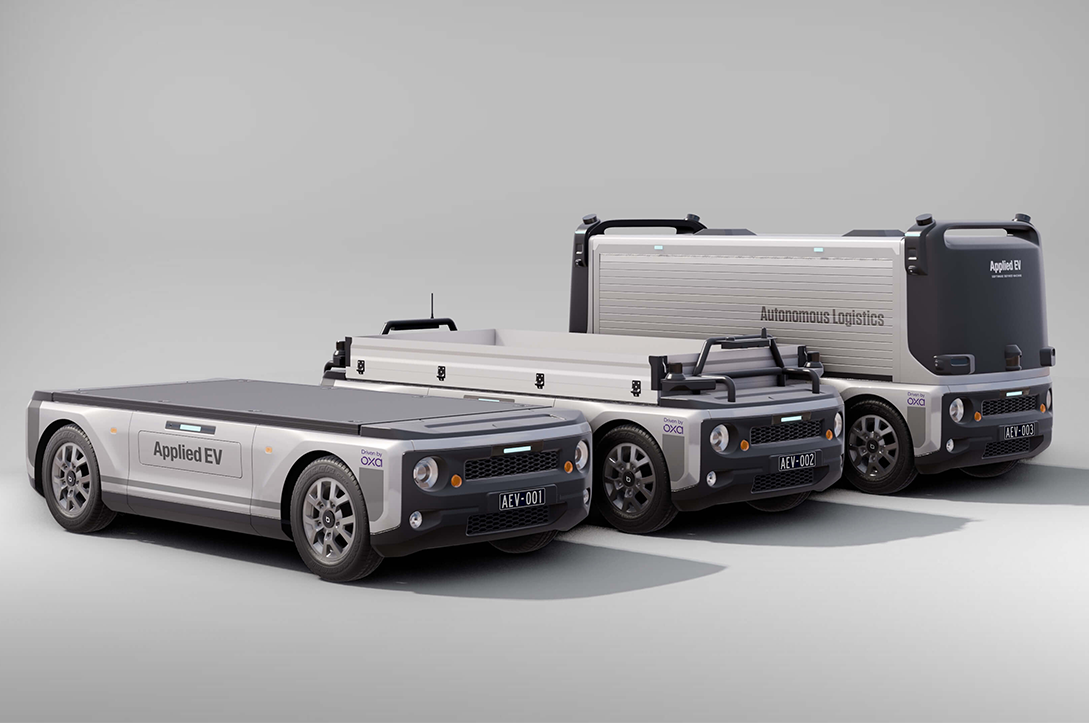
The NRFC’s $30.7 million investment in Applied Electric Vehicles – a Melbourne-based manufacturer of autonomous electric vehicles – is enabling the use of fully autonomous vehicles in remote, hazardous, and difficult-to-access environments in industries such as logistics, light industry, and mining.
Get in touch
Do you have an investment-ready proposal aligned to the Transport Priority Area? Read our investment guidance and then contact the NRFC to discuss whether your project is eligible for funding and how we can work together to further develop Australia’s transport sector.
[1] Bureau of Infrastructure and Transport Research Economics, Australian aggregate freight forecasts – 2022 update, November 2022, https://www.bitre.gov.au/sites/default/files/documents/bitre_rr154.pdf(Opens in a new tab/window)
[2] Bureau of Infrastructure and Transport Research Economics, Australian aggregate freight forecasts – 2022 update, November 2022, https://www.bitre.gov.au/sites/default/files/documents/bitre_rr154.pdf(Opens in a new tab/window)
[3] Australian Renewable Energy Agency, Decarbonising heavy transport is critical to net zero journey, December 2024, https://arena.gov.au/blog/emissions-reductions-arena-heavy-transport/(Opens in a new tab/window)