Overview oftheNRFC's approach to assessing and evaluating the impact of our activities including as required by the National Reconstruction Fund Corporation Act 2023 (Cth).
The NRFC exists to diversify and transform Australia’s industry and economy by:
Growing or improving industrial capability; or
Improving industry’s ability to pursue value-adding opportunities; or
Supporting a long-term improvement in economic diversity.
The NRFC is further expected to crowd-in finance, and support the development of market-leading enterprises in the priority areas of the Australian economy that deliver high-value, internationally competitive products and services across the value chain[1] – as amplified through the recent Statement of Expectations.
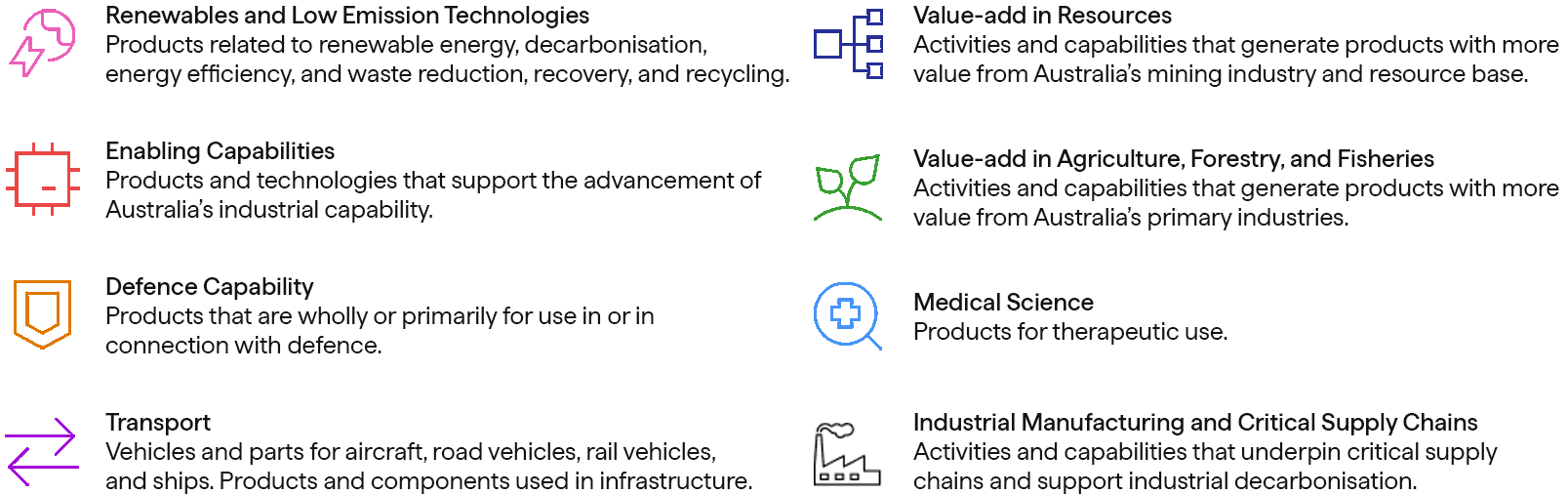
We invest on behalf of Australians and have an important responsibility to deliver positive impact through our portfolio of activities – for the community and the country’s manufacturing capability across eight Priority Areas (Figure 1).
Our evolving impact framework sets out how we prioritise, identify, measure, track, manage, and communicate the impacts of our activities. It is an important tool to demonstrate the difference our activities are making for Australia, and the progress we are making towards our mandated public policy objectives.
The framework identifies qualitative and quantitative indicators that we will collect from our borrowers and investee companies, and will help formalise how we estimate and evaluate the broader economic, societal, and other impacts of the NRFC’s work over time.
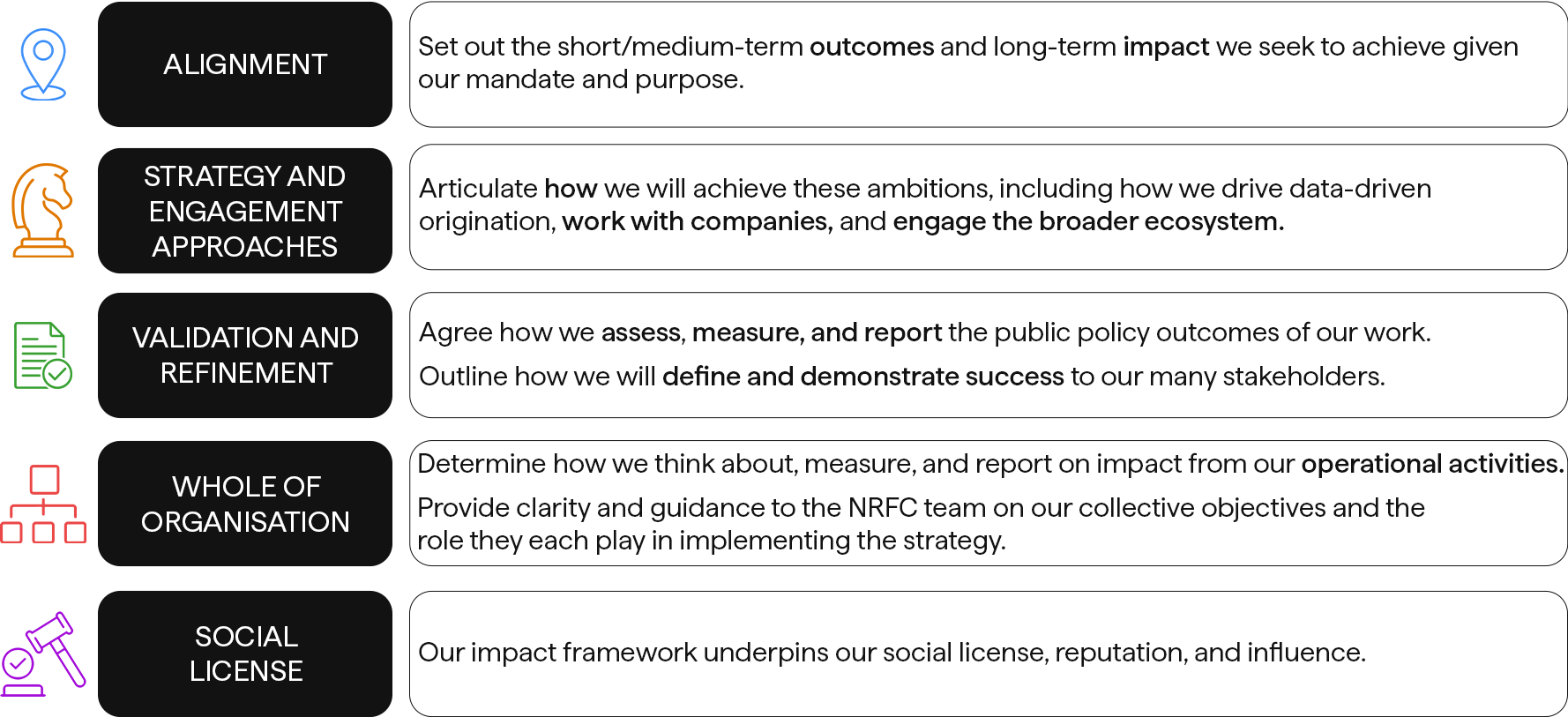
The framework is also intended to help us achieve our public policy outcomes by (Figure 2):
supporting the delivery of our corporate strategy: through a consistent, transparent, and credible approach to impact measurement and evaluation;
building an evidence base: to amplify our influence across the ecosystem;
providing clarity: helping prospective investees and key stakeholders better understand what we seek to achieve through our activities and what we look for in opportunities. This in turn should help us more efficiently meet our public policy aims; and
helping to develop case studies: to increase broad understanding of our impact.
Figure 2: Framework principles
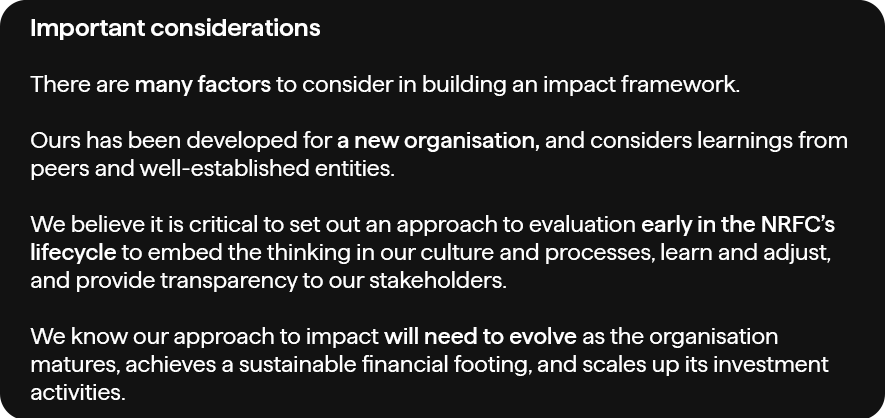
In developing our approach, we have looked to global best practice, learned from peers and well-established entities, and importantly, considered what is unique about our organisation, to devise a tailored approach for framing impact evaluation at the NFRC.
Principles
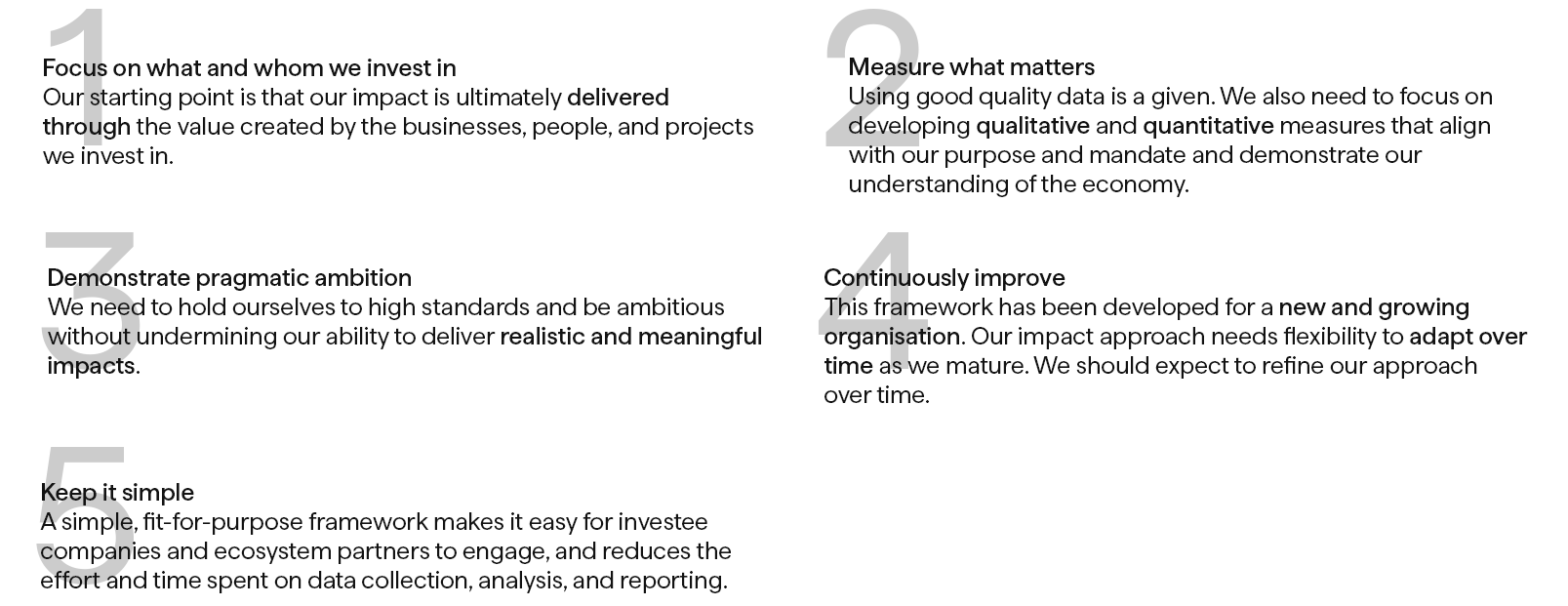
Our evolving framework is anchored around a number of key principles derived from our research and conversations with other organisations:
Figure 3: Framework design principles
Direct impact
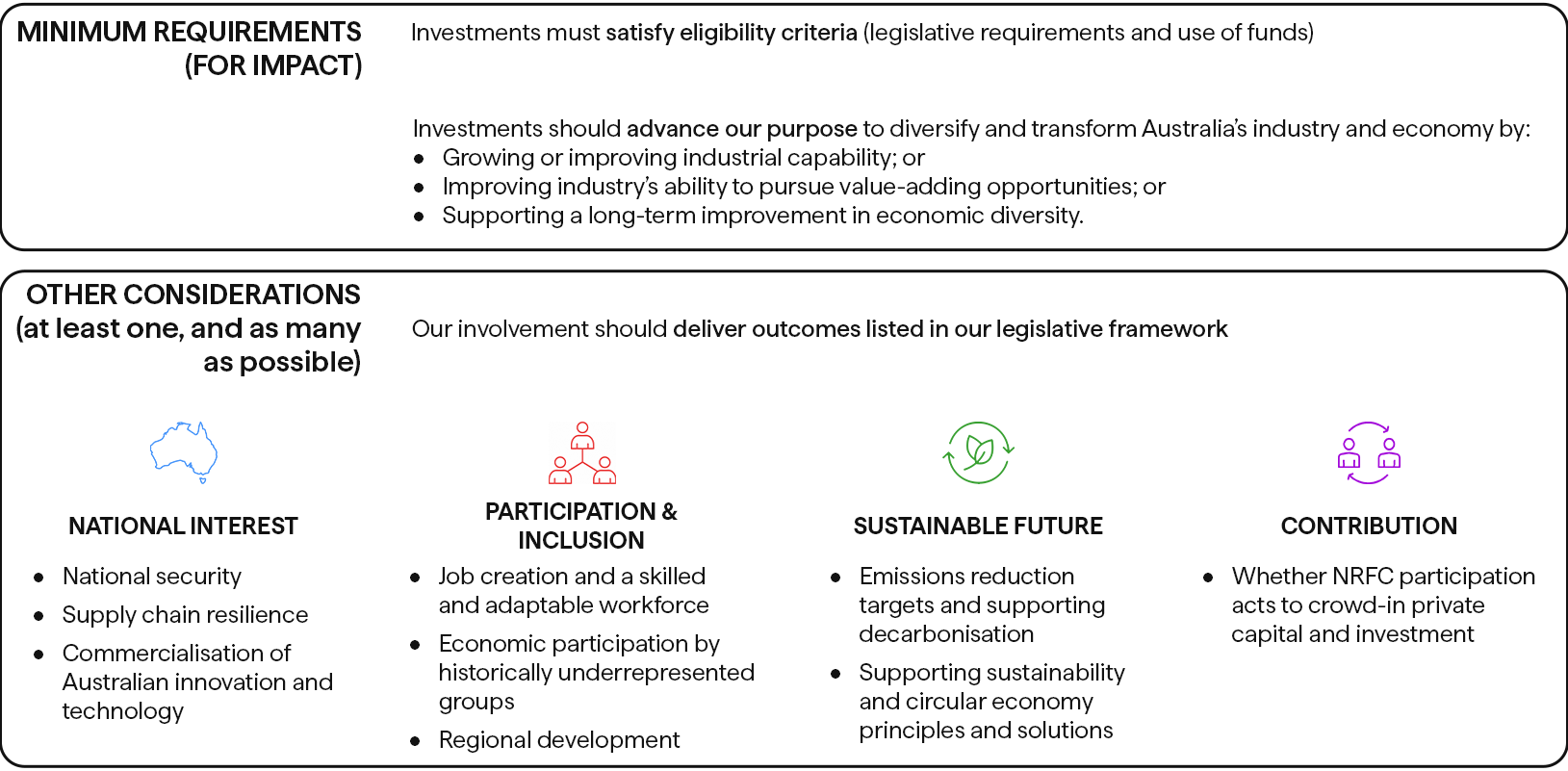
As part of investment due diligence, all potential investments are assessed for their alignment to the policy outcomes outlined in our legislative framework[2].
The core dimension we consider there is the degree to which an investment helps advance the NRFC’s purpose to diversify and transform Australia’s industry and economy, and strengthen the country’s industrial capability.
The other factors we assess for include alignment to national interest, improving participation and inclusion, environmental considerations, and facilitating flows of finance. These are detailed under the “Other Considerations” in Figure 4.
Figure 4: Approach to assessing impact for individual investments
We also seek to ascertain the degree to which NRFC involvement is additional or value-adding to what the market already provides.
Individual investments will rarely, if ever, meet all public policy objectives outlined in our legislation – and we do not expect, or require, them to. The approach in Figure 4 reflects this, and provides flexibility for opportunities to deliver positive outcomes against at least one of the Other Considerations (and as many as possible).
Over time, we will look to build a portfolio that covers all public policy outcomes, and invest in businesses, projects, and activities that will contribute to our purpose – noting that this will look different in each of the eight Priority Areas.
System-wide impacts
We consider the integrated nature of our investments including where capabilities cut across Priority Areas. We continue to evolve our logic map that details how our inputs and activities contribute to near- and medium-term changes that lay the foundations for system-wide industrial transformation, economic diversification, and greater resilience.
Measuring direct impact (investment- and portfolio-level)
We have defined a set of metrics we capture to understand and evaluate the direct impact of our and our portfolio’s activities over time. Every data point maps back to one of our mandated public policy objectives[3].
These metrics include those described in our Corporate Plan – such as capital committed, geographical diversity, and private capital leveraged. They also include measures of:
Innovation: R&D expenditure, patents filed or granted
Estimating system-wide impact
Periodically, we will undertake broader qualitative assessments to understand how and where we are contributing to:
Growing industrial capability;
Shaping industry and expanding capacity;
Creating supply chains and new industries;
Building resilience; and
Delivering other positive outcomes.
We will also incorporate economic analyses that quantify our contribution to improvements in manufacturing productivity, and estimate the multiplier effect of our activities within the ecosystem.
For both time horizons, it is essential to ensure accurate representation of our contribution based on additionality and proportionality.
In the future, we will look to communicate the impact of our activities specific to each Priority Area. Finally, alignment with other Government Specialist Investment Vehicles (SIVs) on definitions of key measures will be important to be able to assess the full impact of the Commonwealth’s investment activities over time.
Sharing our approach and learning with others
We seek to work closely with our borrowers and investee companies, other investors, government departments, and other key stakeholders within the ecosystem to set ourselves up so we can, over the medium-to-long term, deliver positive outcomes for Australia, in line with our mandate.
In sharing what we see, learn, and experience with others, publishing this first version of our evolving impact framework, and partnering with others, we aim to accelerate positive outcomes for Australia.