

The latest article in our Insight Snapshot series focuses on the NRFC’s Value-add in Agriculture, Forestry and Fisheries Priority Area and the opportunities for investment in businesses that turn Australia’s food, fibre, and timber strengths into higher-value products and manufacturing capability. Visit our website to read our most recent Insight Snapshots on our Transport and Renewables and Low Emission Technologies Priority Areas.
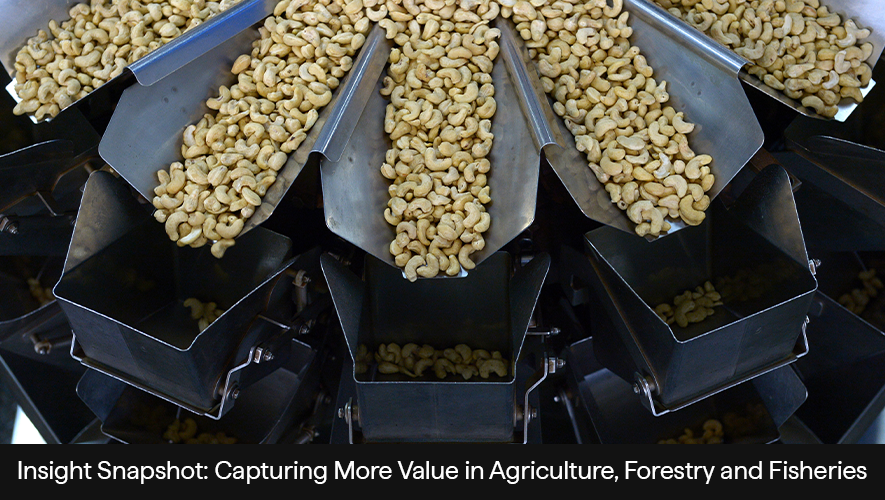
Australia’s agricultural sector has been a driving force of the economy since before Federation, with our primary products known throughout the world for their quality.
But value is not only created at the farm gate, in the forest, or at the wharf. It is also created in the processing plants, packaging lines, cold stores, engineered-wood facilities, and manufacturing systems that convert raw inputs into finished products that meet domestic and export demand.
This Insight Snapshot focuses on the NRFC’s Value-add in Agriculture, Forestry, and Fisheries Priority Area and the investments that can be made to ensure that our agricultural sector continues to thrive in the face of international trade uncertainty, technological change, and the impacts of climate change.
In this article, we outline what this Priority Area covers, why it matters for Australia’s economy and resilience, opportunities for growth, and how NRFC investment can help build capability across agriculture, forestry and fisheries value chains.
What does value-add in agriculture, forestry and fisheries cover?
Value-add in agriculture, forestry and fisheries is best understood as a systems capability rather than a single industry segment. It spans the design, processing, manufacturing, and distribution steps that sit downstream of primary production, and it includes the equipment, technology, and production know-how needed to lift quality, efficiency, and reliability at scale.
In practical terms, it can include:
- upgrading or expanding food and beverage manufacturing capacity
- advanced processing for meat, dairy, grain. and horticultural products
- seafood processing and higher-value product formats
- forestry processing, including engineered timber and other wood products
- packaging, cold-chain, storage, and logistics systems that improve shelf life and reduce waste
- traceability, quality systems, and production technologies that support premium market access.
The emphasis is on building depth in domestic supply chains so Australia retains more of the value created from what it grows, harvests, and catches, and so businesses can scale production and compete on quality, consistency, and responsiveness.
Why it matters for Australia
Value-add in Agriculture, Forestry and Fisheries sits at the intersection of manufacturing, regional development, and resilience. Primary production is geographically dispersed and often distant from end markets. When more processing and manufacturing capability exists onshore, Australia can reduce exposure to long supply chains, improve security of supply for essential goods, and support stable regional employment and skills development.
Value-add capability also helps diversify local economies. Processing and manufacturing facilities can anchor broader ecosystems of suppliers, maintenance contractors, logistics operators, and technical roles. That capability lift can spread, with improvements in automation, quality assurance, and production systems flowing across adjacent businesses and regions, strengthening industrial competitiveness over time.
The growth opportunity
The growth opportunity in Value-add Agriculture, Forestry and Fisheries is about moving up the value chain through more sophisticated processing, stronger brands, higher-value product formats, and technology-enabled manufacturing.
For investors, the opportunity often concentrates where three things come together:
- an established supply of high-quality raw inputs
- clear market demand for differentiated or premium products
- a scalable pathway to lift productivity through modern equipment, automation, and better process control.
As global consumers and buyers place greater emphasis on provenance, safety, consistency, and reliable delivery, Australian firms that invest in processing capability, cold-chain, and quality systems can position themselves to participate more strongly in high-value markets. At the same time, domestic capability can help smooth the impact of disruptions by keeping critical production and distribution capacity closer to home.
How NRFC investment builds sovereign capability
NRFC investment can help unlock value-add opportunities by supporting projects that expand or modernise facilities, introduce new manufacturing capability, and strengthen domestic supply chains. In many cases, value-add projects are capital intensive and require staged upgrades, new production lines, or modernisation programs that deliver productivity and quality improvements over time.
The NRFC’s investment toolkit includes debt, equity, and guarantees, and debt deals are an important part of the NRFC’s investment strategy. This flexibility matters for value-add businesses that need growth capital to improve facilities and introduce advanced manufacturing capability without disrupting operations.
Investments that deepen onshore capability can also strengthen resilience by building local supplier networks, improving logistics and storage systems, and increasing Australia’s capacity to process essential products domestically during periods of disruption.
NRFC investment case studies

Patties Food Group
The NRFC’s $36 million debt investment in Patties Food Group is backing regional jobs, advanced manufacturing, and a new growth phase at Australia’s leading meat pie manufacturer.
The Arnott’s Group
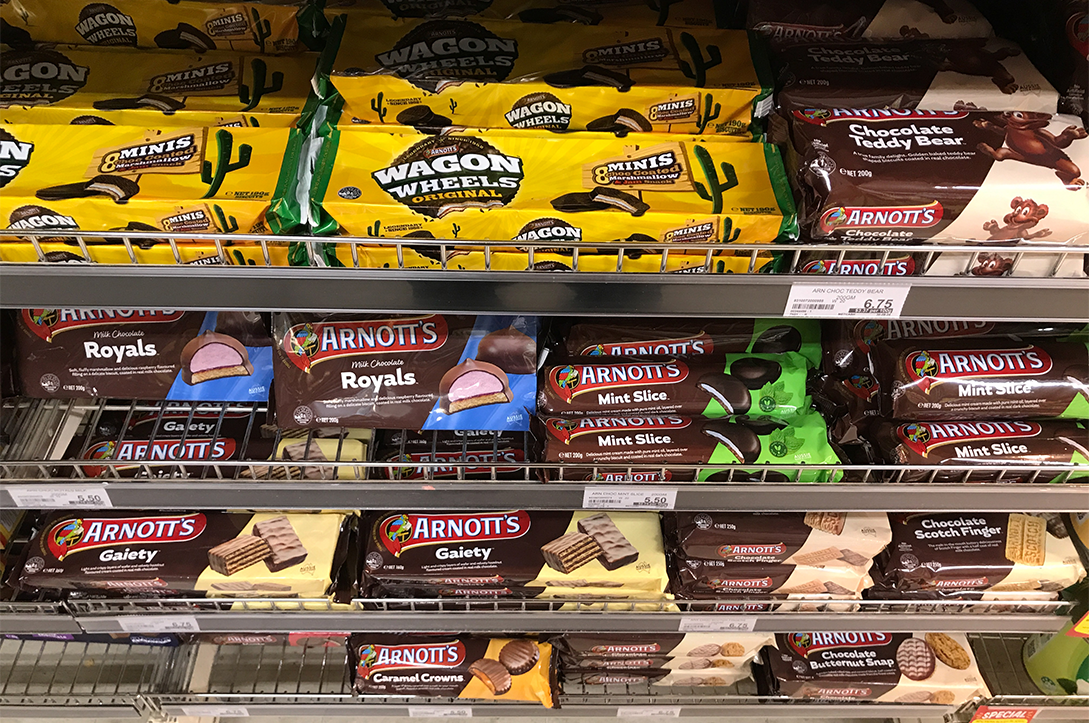
The NRFC’s $45 million debt investment in the Arnott’s Group is helping the iconic Australian food manufacturer to improve its advanced manufacturing capabilities and create Tim Tam biscuits for export around the world.
Get in touch
Do you have an investment-ready proposal aligned to the Value-add in Agriculture, Forestry and Fisheries Priority Area? Read our investment guidance and then contact the NRFC to discuss eligibility and how we can work together to strengthen Australia’s value-add capability across agriculture, forestry, and fisheries value chains.