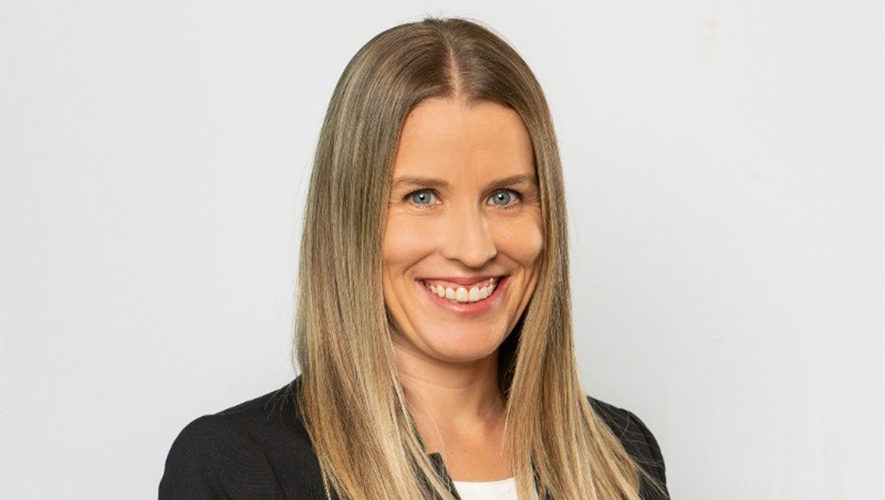
Lauren McGregor was recently appointed as Head of the NRFC’s Net Zero Fund, where she will oversee the NRFC’s investments to support large industrial firms to decarbonise and help domestic manufacturers of low emissions technologies to scale up their businesses.
We sat down with Lauren to discuss her new role and get her take on the impact that she expects the Net Zero Fund to have on Australia’s emissions reduction ambitions.
What excites you most about your new role as Head of the Net Zero Fund?
What excites me most is the opportunity to help turn decarbonisation plans into real projects.
During my time at the NRFC, I've seen how the right investment can help companies move from talking about projects to actually building them. I've spent a lot of time working with businesses across the resources sector, and one thing that's become clear is that the challenge isn't a lack of ambition. It's often a lack of capital, confidence, or the right commercial conditions to get projects moving.
This role is an opportunity to work with industry to overcome those barriers and support investments that reduce emissions while keeping Australian industry competitive. That's a challenge I find really exciting, and one that can have a lasting impact on Australia's future.
You've had extensive experience in financing the Australian resources sector. What are some of the lessons you've learned from this sector that you'll be able to apply in your new role?
One of the biggest lessons is that successful projects need more than just funding. In resources, I've seen technically strong projects struggle because of execution challenges, infrastructure constraints, or competing priorities within organisations. Capital is only one piece of the puzzle.
I've also learned the importance of staying commercially focused. Even when a project delivers broader economic or environmental benefits, it still needs to stack up commercially.
The other lesson is the value of partnerships. The best outcomes usually come when industry, investors, and government are working toward the same goal. Decarbonisation is no different. Nobody is going to solve these challenges alone, so bringing the right people together is often just as important as providing capital.
Why is the Net Zero Fund important for Australia's emissions reduction ambitions?
If Australia is going to reach its emissions reduction targets, we need to make meaningful progress in some of our most emissions-intensive industries.
Many of the technologies needed to reduce emissions already exist, but deploying them at an industrial scale can be expensive and complex. Companies are often balancing long payback periods, technology risk, and global competitive pressures.
The Net Zero Fund can help bridge that gap. Our role is to support commercially viable projects that reduce emissions but might otherwise struggle to secure funding or move forward as quickly as needed.
If we get it right, we can help reduce emissions while strengthening Australian industry at the same time.
What is your goal for the Net Zero Fund and how do you plan to achieve it?
My goal is for the Fund to make a genuine difference, not only in reducing emissions, but also in strengthening Australian industry and helping build the industries that will underpin our future economy. That means supporting investments that improve competitiveness today while also developing the new technologies, supply chains, and sovereign capabilities that will be important for Australia over the long term.
The focus now is on working closely with industry to identify where a Net Zero Fund investment can make the biggest difference, supporting projects that reduce emissions, and helping businesses invest in the technologies and capabilities they'll need to remain competitive in the future.
If we're successful, we'll see lower emissions, stronger industries, new areas of economic growth, and greater sovereign capability across a range of sectors that will be important to Australia's future. Ultimately, I want the Net Zero Fund to be known as a practical and commercially credible partner that helps industry invest, grow, and decarbonise.
How will investing via the Net Zero Fund differ from investments made under the NRFC's General Portfolio?
The starting point is that both the Net Zero Fund and the General Portfolio support the same overall purpose: creating future prosperity by revitalising Australian manufacturing. Both are focused on strengthening Australia's industrial base, supporting economic growth, and backing investments that deliver long-term benefits for the country.
Where the Net Zero Fund differs is in its specific focus on industrial decarbonisation. The Fund is designed to support investments that help reduce emissions, improve energy efficiency, and accelerate the adoption of technologies that will help Australian industry remain competitive in a lower-carbon world.
That gives us greater flexibility to support projects that deliver significant emissions reductions but may not fit neatly within traditional commercial financing models. In some cases, that might mean offering longer tenors or using financing structures that better reflect the challenges these projects face.
That said, the fundamentals don't change. We still need to see strong management teams, sound project economics, and a clear rationale for why our involvement is needed. The objective is not to replace private capital, but to help unlock investments that can deliver both emissions reduction and long-term economic value for Australia.
What advice do you have for businesses looking to apply for investment under the Net Zero Fund?
Be really clear about three things: the problem you're solving, the impact you'll have, and why our involvement matters.
We're looking for businesses that have a well thought through project and a clear understanding of how it will reduce emissions or improve energy efficiency. Just as importantly, we want to understand the commercial case and how the project will succeed over the long term.
It's also helpful to be clear about the barrier you're facing. Is it the cost of capital? Technology risk? A funding gap that's preventing a final investment decision? The better we understand the challenge, the better we can assess whether the Fund is the right fit.
The strongest applications are usually the ones that are honest about both the opportunities and the risks and can clearly explain why the project deserves support.
Visit our website to read more about the Net Zero Fund.